Painful Sex & Fibroids
Painful Sex & Fibroids
The Hidden Symptom Many Women Don't Talk About.
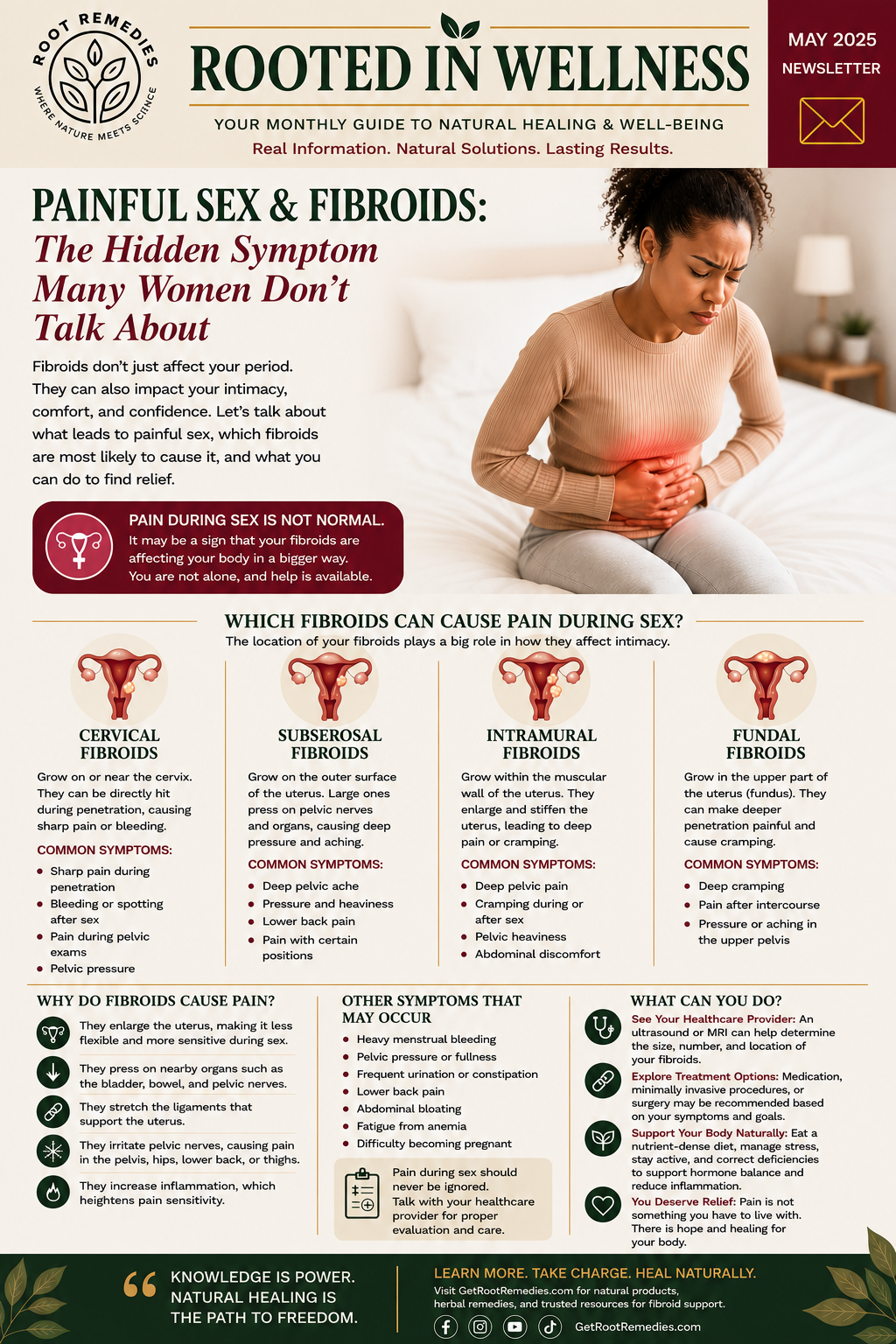
When most women think about uterine fibroids, they think about heavy menstrual bleeding, painful periods, bloating, or the constant urge to urinate. While these are some of the most common symptoms, there is another symptom that many women experience but rarely talk about.
Pain during sex.
For many women, this symptom can be confusing, frustrating, and even embarrassing. Some begin avoiding intimacy because they're afraid it will hurt. Others wonder if something else is wrong with their bodies, or they believe they're simply expected to live with the discomfort.
The truth is, pain during sexual intercourse is not normal.
If you have fibroids and sex has become painful, your body is trying to tell you something. Understanding why this happens can help you take the next step toward finding relief.
As a Certified Master Herbalist and Functional Nutritionist, I've worked with thousands of women who have struggled with fibroids and the symptoms that often come with them. One thing I've learned is that knowledge gives you power. The more you understand what's happening inside your body, the better equipped you are to make informed decisions about your health.
In this month's newsletter, we're taking a closer look at one of the lesser-known symptoms of fibroids. We'll explore why certain fibroids can make intercourse painful, which types are most likely to cause discomfort, and what treatment options may be available.
Let's get started.
What Is Dyspareunia?
The medical term for painful sexual intercourse is dyspareunia.
It refers to pain that occurs before, during, or after sexual intercourse. Some women feel pain only during penetration, while others experience deep pelvic pain with certain positions or after intercourse has ended.
The pain may be:
Sharp or stabbing
Deep and aching
Cramping similar to menstrual cramps
A feeling of pressure inside the pelvis
Pain that radiates into the lower back, hips, or thighs
Some women also experience spotting or bleeding after intercourse.
Not every woman with fibroids will experience dyspareunia, but when fibroids grow larger or develop in certain locations, they can interfere with the normal movement of the uterus during intimacy.
Why Can Fibroids Make Sex Painful?
The uterus is not a fixed organ. During intercourse, it naturally moves within the pelvis while the cervix changes position. This movement is completely normal.
However, fibroids can change the size, shape, weight, and flexibility of the uterus.
As fibroids grow, they may:
Make the uterus larger and less flexible
Press against nearby organs, such as the bladder and bowel
Stretch the ligaments that support the uterus
Irritate nearby pelvic nerves
Increase inflammation inside the pelvis
These changes can make normal movement during intercourse painful.
The larger the fibroid, the more likely it is to affect surrounding tissues. However, even smaller fibroids can cause significant discomfort if they develop in sensitive areas of the uterus.
Which Fibroids Are Most Likely to Cause Pain During Sex?
Not all fibroids cause painful intercourse. In many cases, the location of the fibroid is more important than its size.
Cervical Fibroids
Cervical fibroids grow near the cervix, the opening between the uterus and the vagina.
Although they are relatively uncommon, they are one of the most painful types of fibroids during intercourse.
During penetration, the cervix naturally moves upward. A fibroid in this area can be repeatedly bumped, causing sharp pain, pressure, or bleeding after sex.
Common symptoms include:
Sharp pain during penetration
Spotting or bleeding after intercourse
Pelvic pressure
Pain during pelvic examinations
Intramural Fibroids
Intramural fibroids grow within the muscular wall of the uterus.
These are the most common type of fibroid.
As they enlarge, they make the uterus heavier and less flexible. During intercourse, movement of the uterus may trigger deep cramping or muscle spasms.
Women often report:
Deep pelvic pain
Cramping during or after sex
Pelvic heaviness
Lower abdominal discomfort
Subserosal Fibroids
Subserosal fibroids grow on the outside surface of the uterus.
Instead of affecting menstrual bleeding, these fibroids often press against nearby organs and nerves.
During intercourse, that added pressure can cause:
Deep pelvic aching
Lower back pain
Pain with certain sexual positions
A feeling of heaviness in the pelvis
Fundal Fibroids
Fundal fibroids develop in the upper portion of the uterus.
These fibroids may make deeper penetration uncomfortable because they increase tension on the ligaments that support the uterus.
Women commonly experience:
Deep cramping
Pressure in the upper pelvis
Pain after intercourse
Pelvic aching that lasts for several hours
Other Symptoms That May Occur
Pain during intercourse is rarely the only symptom.
Many women also experience:
Heavy menstrual bleeding
Passing blood clots
Pelvic pressure
Frequent urination
Constipation
Lower back pain
Abdominal bloating
Fatigue from iron-deficiency anemia
Difficulty becoming pregnant
If you're experiencing several of these symptoms together, it's important to discuss them with your healthcare provider.
What Can You Do?
The good news is that you don't have to simply live with painful intercourse.
The first step is getting an accurate diagnosis. Your healthcare provider may recommend a pelvic exam, ultrasound, or MRI to determine the size, number, and location of your fibroids.
Treatment options vary depending on your symptoms, age, and future pregnancy plans. These may include monitoring the fibroids, medications to manage symptoms, minimally invasive procedures, or surgery in more severe cases.
Supporting your overall health is also important. Eating a nutrient-rich diet, maintaining a healthy weight, staying active, managing stress, correcting nutrient deficiencies, and getting enough sleep can all help support hormone balance and overall reproductive wellness.
Martin's Wellness Tip
Pain is your body's way of asking for attention, not something you should simply learn to live with.
If intimacy has become painful, don't ignore it or assume it's just part of having fibroids. The location and size of your fibroids may be affecting the way your uterus moves and interacts with nearby tissues.
The sooner you understand what's happening, the sooner you can begin exploring options that may help improve your quality of life.
This Month's Takeaway
Fibroids don't just affect your menstrual cycle. They can also affect your relationships, emotional well-being, confidence, and quality of life.
Pain during sex is a real symptom experienced by many women with fibroids, yet it is often one of the least discussed. Many women suffer in silence because they feel embarrassed, ashamed, or believe there is nothing they can do. The truth is, you deserve answers, support, and compassionate care.
Learning about your body is one of the most powerful steps you can take toward improving your health. Understanding the signs and symptoms of fibroids allows you to have more informed conversations with your healthcare provider and make decisions that are right for you.
Remember, your symptoms matter. Your concerns deserve to be heard. Most importantly, you do not have to walk this journey alone.
At Get Root Remedies, our mission is to empower women through education, evidence-informed natural wellness, and compassionate support. We believe that when women understand their bodies, they are better equipped to advocate for themselves, make informed choices, and take meaningful steps toward better health.
Whether you're newly diagnosed with fibroids or have been living with them for years, know that there is hope. With the right knowledge, the right support, and a personalized approach to your care, you can move toward a healthier, more comfortable future.
Thank you for allowing us to be part of your wellness journey.
We look forward to sharing more educational resources with you in next month's edition of Rooted in Wellness.
To your health,
Martin Benjamin Certified Master Herbalist & Functional Nutritionist Founder, Get Root Remedies

572 Hank Aaron Drive Southeast, Suite 4100-127, Atlanta, GA, 30315
Visit our social accounts


